
Methodology

Geographic scope
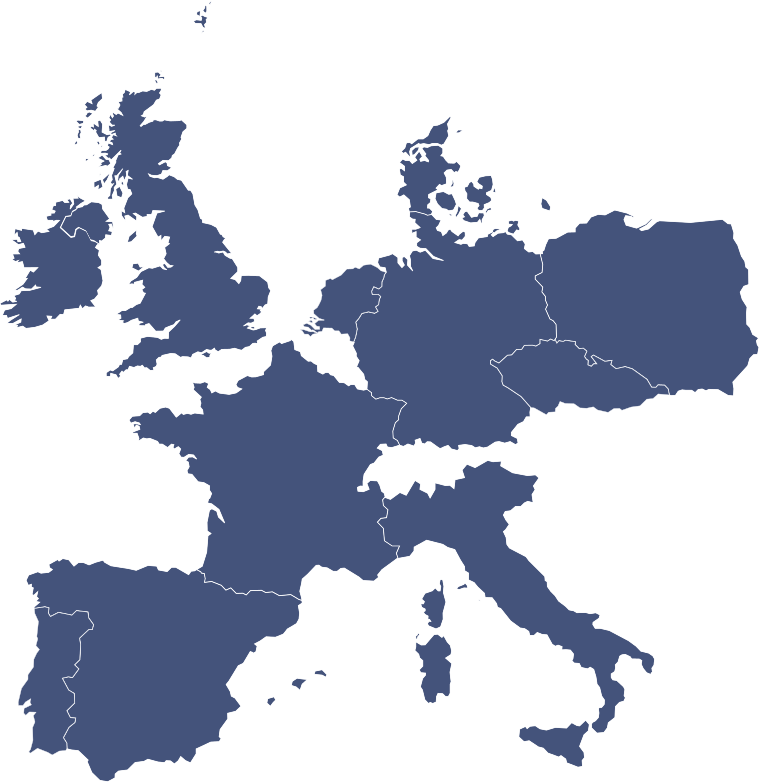
In ten European focus countries — the Czech Republic, Denmark, France, Germany, Ireland, Italy, the Netherlands, Poland, Spain, and the United Kingdom — important actors in commissioning construction and renovation projects are considered.
Regulations linked to a Just Transition
In each country, companies in the real estate and construction value chains are subject to a different range of regulations, covering corporate accountability, energy use, labour conditions and other themes. For the nine EU member states, the transposition of EU regulations into national law plays an important role in shaping the space in which construction clients operate.
Therefore, the country analyses are preceded by a short description of the most relevant EU directives and regulations in this field. Given the differences in national implementation, the research then highlights specific national requirements and their implications for construction clients.
The regulatory assessment was conducted through September 2025. Updates to the CSRD and CSDDD were incorporated in January 2026.

EU regulations
The following EU regulations and their transposition into national law are considered in the field of:
Corporate transparency and accountability

Corporate Sustainability Reporting Directive (CSRD, 2022/2464)
Corporate Sustainability Due Diligence Directive (CSDDD, 2024/1760)
Whistleblower Protection Directive (2019/1937)
Regarding workers’ rights and labour conditions, the following EU regulations and their transposition in national law are considered
Directive on Transparent and Predictable Working Conditions (2019/1152)
Directive on Adequate Minimum Wages (2022/2041)
Posted Workers Directive (2018/957)
In relation to the sustainability performance of the building stock, the following directives and their transposition into national law are considered
Energy Performance of Buildings Directive (EU/2024/1275)
Energy Efficiency Directive (EU/2023/1791)
Waste Framework Directive (2008/98/EC)
National-level regulations
Moreover, the country analyses pay attention to additional national-level legal obligations for corporations related to accountability and transparency requirements and regulations on building sustainability. Similar regulations and requirements are presented for the United Kingdom as a non-member of the EU. Regulatory assessment was conducted in September 2025.
In addition to these corporate-level regulations on the national level, case studies examine further-reaching local project-level regulations from the focus countries.